
First Trial: $98 nett (30 mins | U.P. $228)
Fascia Release Therapy
Targeted Release for Tension, Mobility, and Recovery
Elements’ Fascia Release Therapy targets tightened or “stuck” fascia — the connective tissue that surrounds your muscles and joints. When restricted, it can cause chronic tension, limited movement, and a general sense of heaviness in the body.
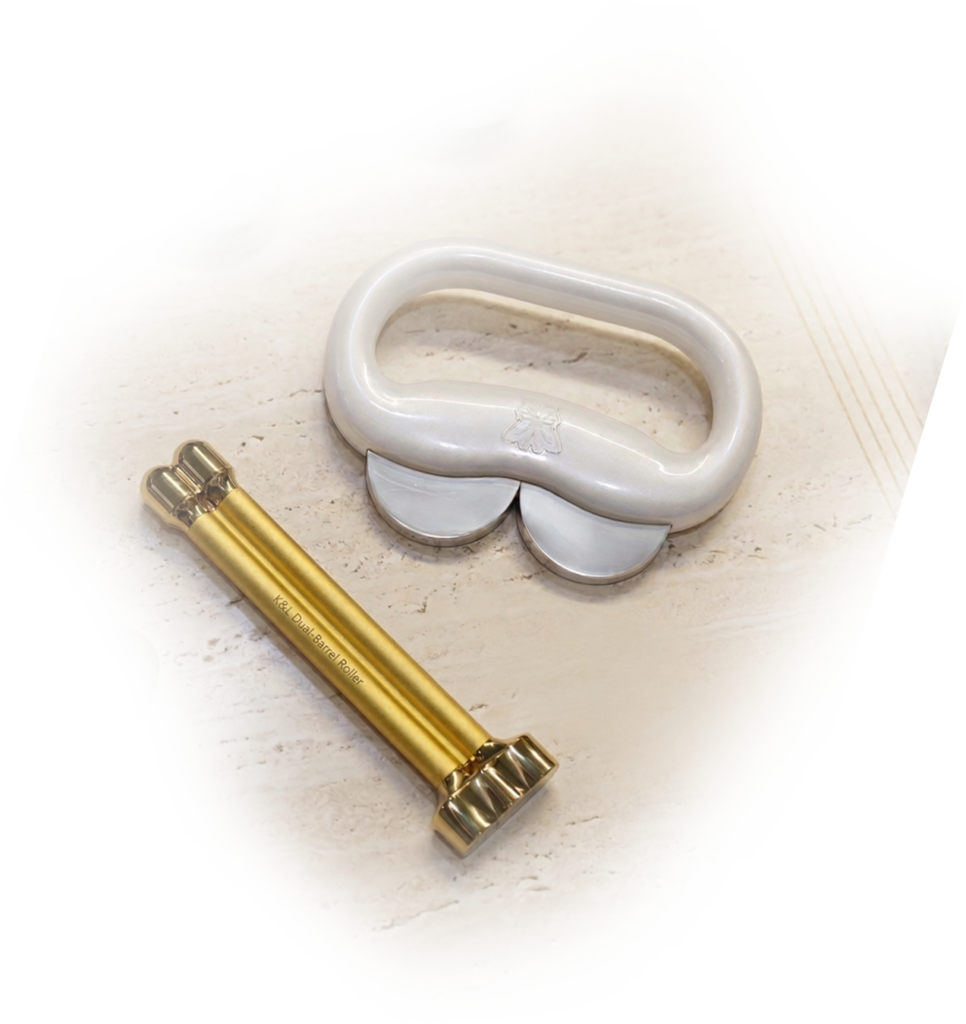
Using gold or silver-plated tools, your therapist glides with controlled pressure along specific areas of restriction, helping to break down adhesions. The tools carry a mild magnetic field, which amplifies the electrical activity in fascial tissue — supporting the body’s natural repair response.
Why do we use real gold and silver in our fascia tools?
We use real gold and silver because they are highly conductive materials that generate a beneficial electromagnetic field. This can support your body’s natural bioelectric energy, helping to recharge cells and reduce energetic blockages.
Benefits include:
- Relief from chronic pain
- Improved posture
- Enhanced energy levels and better sleep
- Better lymphatic flow and digestion
- Reduced overall fatigue
How This Therapy Works
Using specialised gold or silver-plated instruments, the therapist applies precise, controlled strokes along targeted areas of fascia to release tension, improve tissue movement, and support circulation. The magnetic field in the instruments helps stimulate fascial tissue more deeply, enhancing the body’s natural ability to recover and rebalance.
What Fascia Release Therapy May Help With
Fascia Release Therapy may be beneficial for:
- Chronic muscle tightness or stiffness
- Neck and shoulder tension from prolonged sitting or screen use
- “Tech neck” and postural strain
- Reduced mobility or a sense of restriction
- Areas of recurring discomfort
- General body fatigue or heaviness
Why Fascia Matters
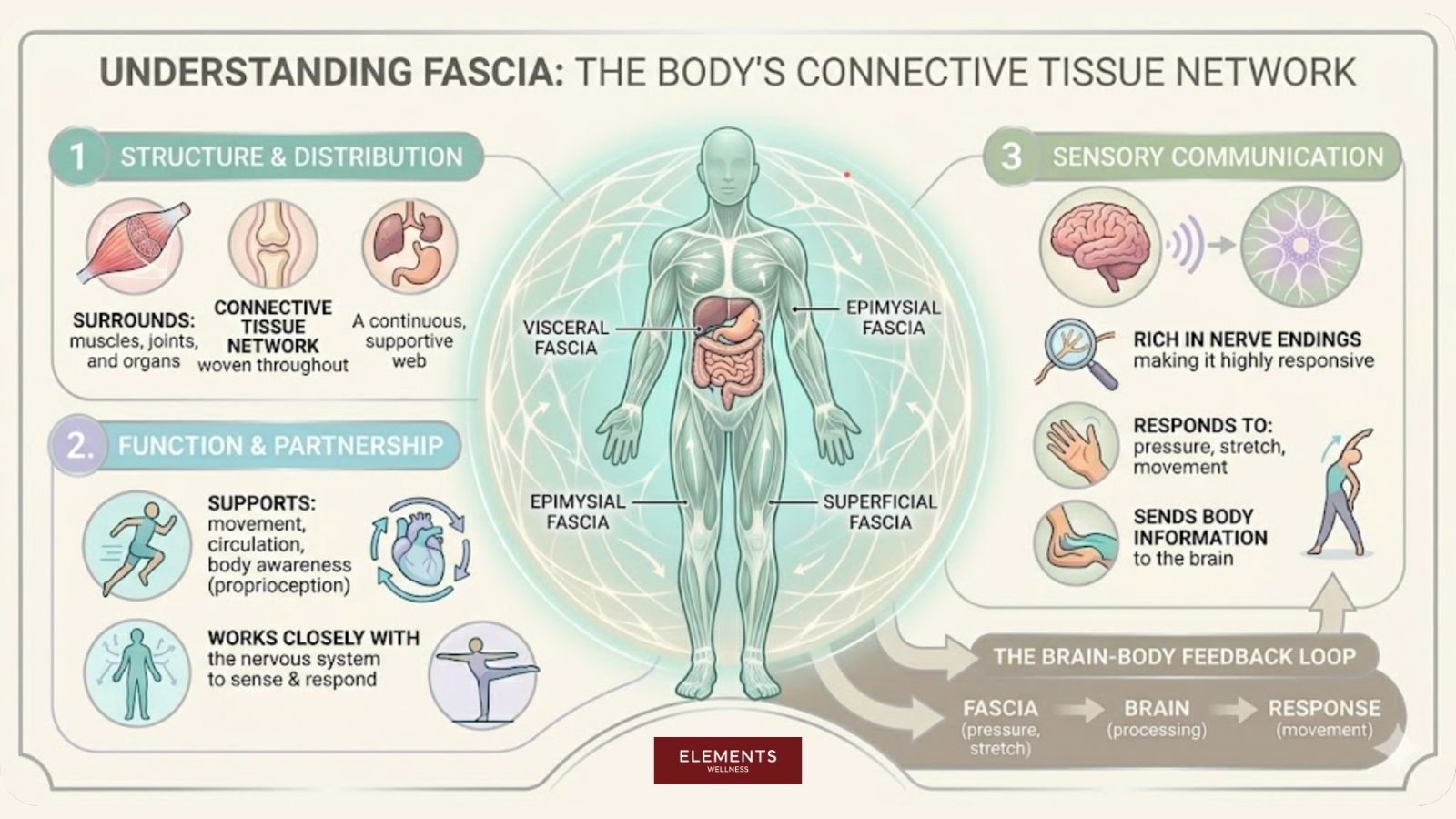
Fascia is a connective tissue network woven throughout the body—surrounding muscles, joints, and organs. It supports movement, circulation, and body awareness, and works closely with the nervous system to help us sense and respond to the world around us. It is also rich in nerve endings, making it highly responsive to pressure, stretch, and movement—constantly sending information from the body to the brain.
When fascia becomes restricted, tissue layers can thicken, lose their natural glide, and develop adhesions. This creates a “stuck” feeling, limiting movement and contributing to localised tension—often experienced as persistent tightness in the neck, shoulders, back, or hips.
Because fascia contains many nerve endings, this tension does not just affect movement—it influences how the body feels, often creating an underlying sense of strain even at rest.
Research suggests these signals may support the body’s natural repair and adaptation processes — which is why Elements’ Fascia Release Therapy, using magnetised gold- or silver-plated tools to apply precise stimulation on areas of restriction, can have a meaningful effect on how the body recovers and rebalances.
Restoring mobility within these tissues helps reduce signals of tension and strain, allowing the body to move and recover more naturally.
Featured Protocol: Head, Neck & Nervous System Reset
A core protocol focuses on the head, neck, and nervous system—areas commonly affected by modern lifestyle patterns.
Who This Protocol Is For
- Brain fog or mental fatigue
- Poor sleep or difficulty winding down
- Tension at the base of the skull
- Neck stiffness and “tech neck”
- A heavy or pressured feeling in the head
- Facial puffiness linked to sluggish lymphatic flow
How This Protocol Works
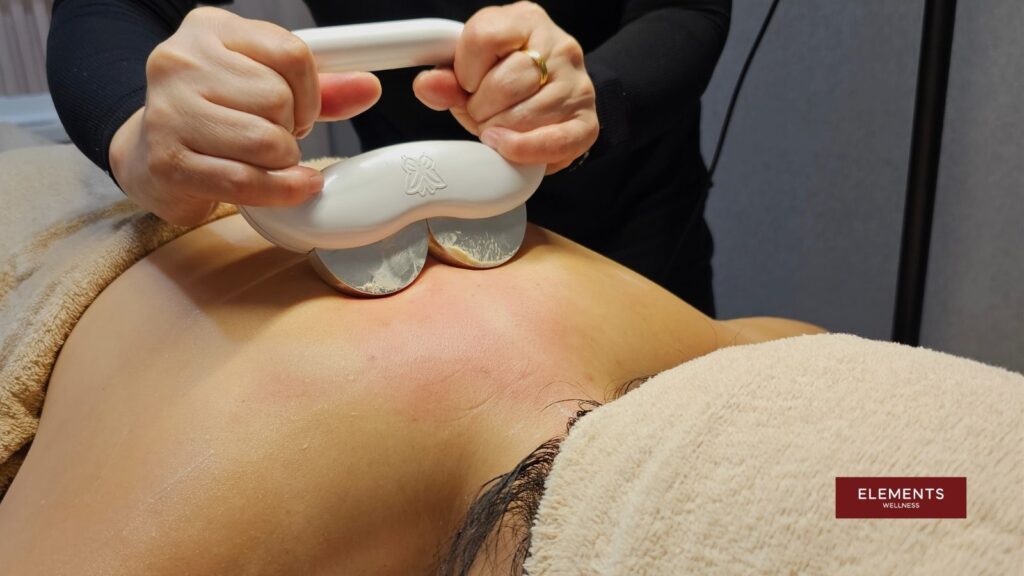
Base of Skull & Upper Neck
Releases tension linked to head pressure and neck stiffness.
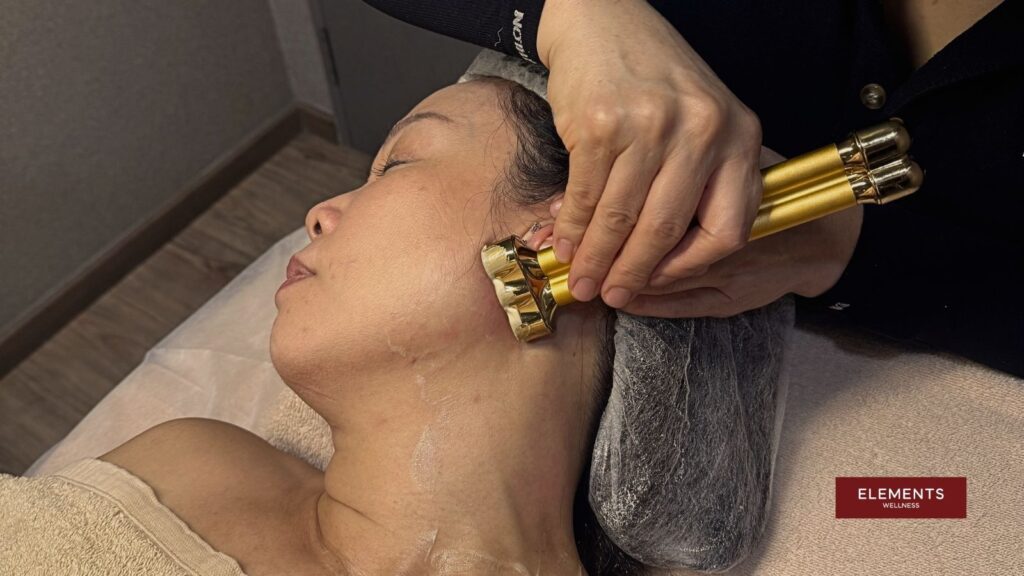
Lymphatic Support Around the Head & Neck
Supports fluid movement to reduce puffiness and improve circulation.
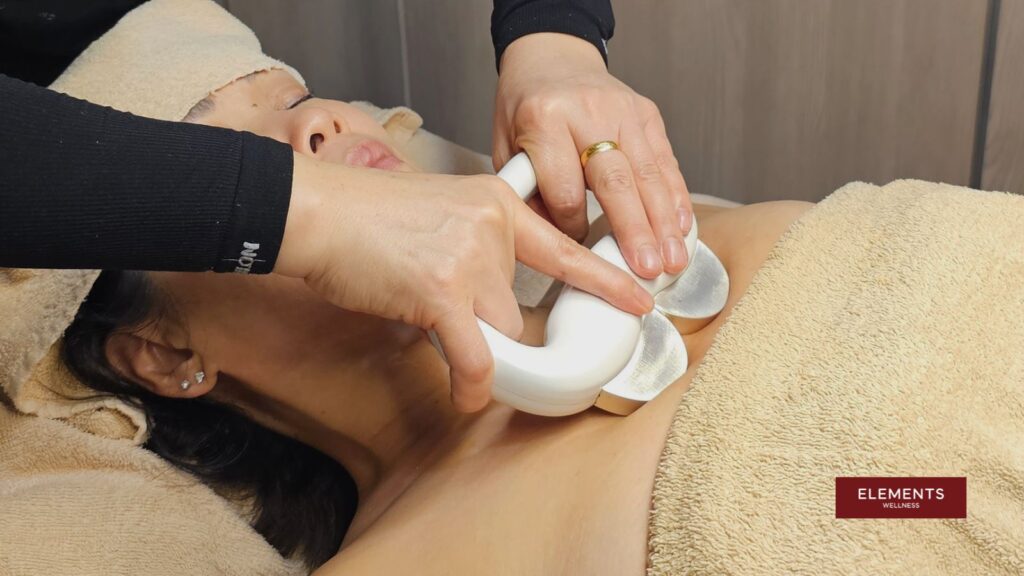
Sternum & Chest Fascia Release
The centre of the chest can become restricted from posture, stress, and shallow breathing, creating a sense of pressure through the upper body. Using controlled, precise strokes, the therapist works along the sternum to release chest fascia. As this area softens, the rib cage moves more freely and breathing deepens.
Many experience this as a turning point in the session — where the body shifts out of holding into a more relaxed state.
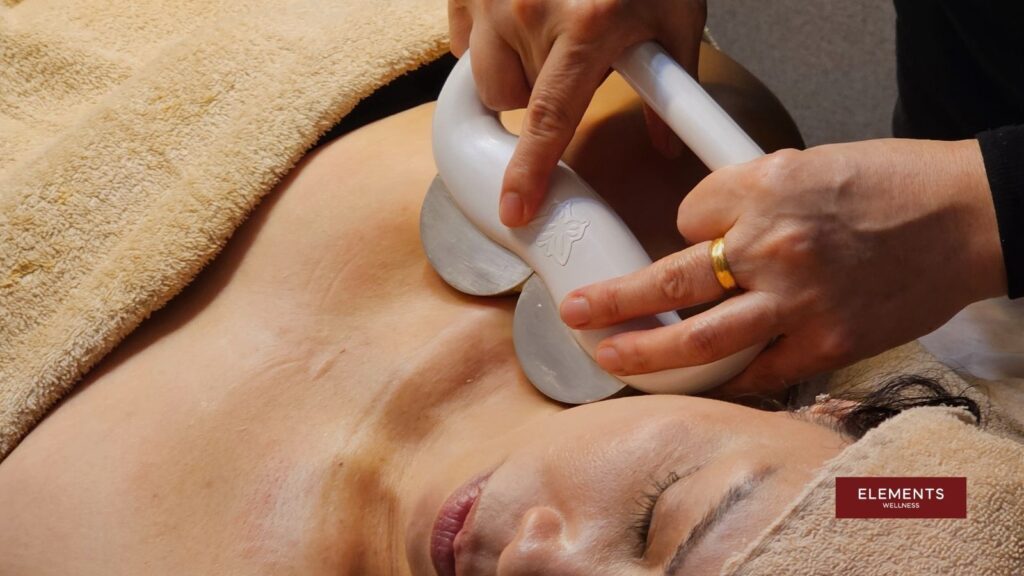
Collarbone & Central Drainage Activation
Supports lymphatic return and circulation.
Why This Protocol Feels Different
Because fascia is closely connected to the nervous system, working along these pathways helps reduce signals of tension and strain and allows the body to settle.
What Clients Often Notice
Because this protocol works along fascial pathways closely connected to the nervous system, the effects often extend beyond physical release.
- A lighter, clearer head
- Reduced neck and shoulder tension
- Easier breathing
- A more relaxed, settled state
A More Precise Way to Treat Tension
Fascia Release Therapy at Elements is a targeted system of treatment protocols, not a fixed routine. By focusing on where your body needs it most — and working along connected pathways — it offers a more precise way to release tension and support recovery.
Frequently Ask Question
-
Does Fascia Therapy feel painful?
Fascia Therapy can feel more intense than a typical relaxation massage, especially in areas where the tissue is more restricted. However, the pressure is controlled and adjusted to your comfort level. Most clients describe it as a “good release,” followed by a noticeable sense of lightness and ease.
-
How is Fascia Therapy different from a regular massage?
Unlike a general full-body massage, Fascia Therapy is targeted and problem-focused. The session is adapted to areas of restriction in your body, using precise techniques to improve tissue movement and reduce tension, rather than following a fixed routine.
-
How often should I do Fascia Therapy?
This depends on your goals. For ongoing tension or mobility issues, sessions every 1–2 weeks can help restore movement more effectively. Once your body feels more balanced, monthly sessions are often sufficient for maintenance.
-
Why do I feel lighter or more relaxed after Fascia Therapy?
Fascia is closely connected to the nervous system and contains many nerve endings that influence how the body senses tension. When areas of restriction are released, the signals sent to the brain shift—from strain and holding to a greater sense of ease. This allows the nervous system to settle, which is why many clients feel lighter, clearer, and more relaxed after the session.